Showing posts with label Historical fiction. Show all posts

Friday, May 25, 2012

Face-Lift 1031

Guess the Plot


All the Queen's Horses

1. In this latest Buckingham Palace tell-all, a former chief groom shovels the shit.

2. Canada's "Queen’s Plate" boasts a field of 17 hopeful three-year-olds and a purse of $1,000,000 –  enough for Josie Callighan to save the family farm--if she can find a horse. When she borrows one from the matronly lady in the big house next door, she learns just what a royal pain this business is.

3. Lars Sekkin, seneschal to the Queen, is given the task of finding out who pushed Humpty Dumpty off of the wall and why they would frame the Queen and her retinue.

4. Rodney is the riding master of the Queen’s Royal Stables and a closet gay involved with the Queen’s youngest son, Prince Stephen. Princess Gloria, unaware of Rodney’s proclivities, uses account irregularities to blackmail him into a liaison. Rodney sends his look-alike half-brother Frederick to her boudoir after dark. When Gloria is found murdered, can Rodney solve the case without implicating Frederick or revealing his and Stephen’s affair?

5. When Gerald's prize stallion wins a big cup race, Queen Elizabeth wants it. But Gerald already agreed to sell the horse to a rich American. Thus begins a battle of wills that threatens to escalate into the 2nd Revolutionary War.

6. Chess grand master Raul Sitzky manages to get all of his pawns to the eighth rank, and promotes each of them to a knight, giving him ten knights. While considering his next move, Sitzky's opponent's head explodes.


Original Version

Dear Agent:

When Gerald MacGrath wins the 1962 Enderton Cup, turning his horse into a national treasure, he has no idea he's stepping from the winner’s circle into a showdown between the horse’s new American owner and Queen Elizabeth II of England.

In dire need of money to clear debts he inherited along with the family farm, Gerald agrees right before the big win to sell his prize stallion to an American breeder. After the win, Elizabeth II, determined to keep the horse properly British, offers up a better deal. The honorable choice is for Gerald to close the sale with the American -- [Honor shmonor. If there's a signed contract, the horse goes to the American. If there isn't, it goes to whomever Gerald chooses.] but that means saying no to a very powerful and very stubborn queen. [Careful, Gerald, you know what happened to Lady Di when she said no to the queen. Wait, it's 1962, so Gerald doesn't know how ruthless the queen is. Poor Gerald.]

The American proves just as stubborn, [Just as stubborn as Queen Elizabeth II? It's now fifty years later and she's still living, just to keep Charles from becoming king. Now that's stubborn.] and as negotiations stall, Gerald's urgent need for cash escalates when his live in housekeeper reveals she's pregnant with his child. [That sounds more like a drop in the bucket than an escalation.] His life in crisis, Gerald’s hold on honor begins to crumble.

When intercession by the UK Prime Minister fails it looks like the fate of a dying breed hangs in the balance on a point of honor. Not only does Gerald's future hang on Gerald's next move, one of the last purebred Cleveland Bays in Britain is heading to America. [Tough. If the queen wanted all her precious Cleveland Bays in England she should have lobbied Parliament to pass a law making it illegal to sell them to foreigners. It's not like the queen has anything better to do.] [The first half of that sentence suggests that Gerald hasn't decided what his next move is; the last half suggests he's already made his move.]

All the Queen's Horses is historical fiction based on the actual events of 1962. I look forward to sending you the manuscript, complete at 80,000 words.

Thank you for your time and consideration,


Notes

Brits are so . . . British. You don't see Russia putting up a stink when an American-owned Wolfhound wins a dog show.

If winning this race turns a horse into a national treasure, Gerald should have had some idea what he was in for. You could change the first paragraph to: When Gerald MacGrath wins the 1962 Enderton Cup, he has no idea he's stepping from the winner’s circle into a showdown between the horse’s new American owner and Queen Elizabeth II, who declares the horse a national treasure that should belong to the British people, specifically herself.

Maybe leaving off the last nine words.

It's not like getting this horse guarantees the American riches and glory. The queen can afford to offer the American a huge profit to sell the horse to her. Hell, the queen can afford to buy Kentucky and every horse in it.

The query's not bad. But you'll have to find a publisher who doesn't believe that those in the horse world would prefer a nonfiction account of this historic event, while those outside the horse world would rather read about more significant historic events.

Wednesday, February 22, 2012

Face-Lift 995


Guess the Plot

When Kings Fall

1. Jem Bartholomew bets his wife and farm at the gambling table. When rival farmer Bill Dexter trumps Jem’s four kings with four aces, Jem’s future doesn’t look so bright anymore. Though his wife isn't complaining.

2. King Edward II asks Cedric the apprentice tile-maker to tile his royal bathroom. Honored, Young Cedric and his fiancée, Guinevere, dream of fame and fortune . . . until the king slips on Cedric's handiwork and a death warrant is issued for the runaway couple.

3. It's been said that when kings fall, it is their queens who suffer. Well, Queen Alibeth has been waiting twenty years for someone to take out King Kramersty. Watching that magnificent black stallion Prince Lok'N'Reth stride to the throne, she knows she's going to enjoy the 'suffering'.

4. The establishment of the kingdom of Saudi Arabia is viewed through the eyes of a destitute Syrian doctor who happens to meet King Saud, and who offers (after his wife mysteriously disappears) to recruit soldiers to tip the scale of war.

5. After the disastrous banking collapse, "Synapse," sacrifices his true name and identity to go undercover and track down the kings of finance responsible. His quest takes him through the riot-ravaged cities of Beijing, London, New York and Dubai and finally to a cigar store on the backstreets of Hong Kong.

6. Aboud Al-Youssef, a pro-democracy activist who predicted the fall of the Arab monarchies three years ago, is about to blow the lid off the coming Arab winter when he mysteriously disappears. Can special agent James Burns find him and uncover a conspiracy threatening to engulf the world in another war?


Original Version

Dear Evil Editor:

Dr. Rashad Pharaon is chased into exile when he secretly marries Jamila, the governor of Syria's arranged fiancée. [This would read more clearly as: ... secretly marries Jamila, fiancée of the governor of Syria.] [My research into the history of Syria, hoping to catch you in an embarrassing factual error, turned up this timeline fact: 1910: Mary Ajamy, a recent nursing graduate from AUB, launches the first women’s rights magazine in the Middle East, called al-`Arus (The Bride). Googling Mary Ajamy led to this article. So my question is: Given that women buy most of the books, why isn't your book about Mary Ajamy?] [And my question to Mary Ajamy is: Isn't it amazing how far Syria has come in the past century?] Without money or home, the couple take refuge in nearby Jordan amongst insurgents who call themselves the Brotherhood. Rashad leaps at the opportunity for a fresh start when, in return for helping their wounded, the leader offers them safe passage to the exotic city of Medina in Arabia. [If a doctor shows up at my doorstep, and I have a steady influx of wounded, no way am I shipping him to Medina. I'm chaining him to an operating table and he's working longer shifts than a med school intern.]

The newcomers' illusion of triumph quickly fades as they fall on dire financial times. [They had no money two sentences ago; perhaps they had already fallen on dire financial times.] Their bad fortunes seem momentarily reversed when they meet King Saud, who grants them aid and citizenship, but Arabia simmers with bad blood. A powerful sultan to the North threatens to overthrow Saud.

The king gathers his war-ravaged army and asks Rashad to recruit the Brotherhood, a force needed to tip the scales in their favor. [These armies must be pretty puny if some insurgents 500 miles away can tip the scales of their war. Are they coming by camel?] Rashad is about to petition the rebels when Jamila vanishes. His conviction rocked, he must now soul-search and make a difficult choice. Should he stay in Arabia and help his new people in their time of greatest need? Or should he find his wife, the rose of his life, and let the king fall? [My guess: He stays; King Saud wins, names the country after himself, locks up the oil rights in perpetuity for his descendants, and then releases Jamila.] [Recommendation: have Rashad go after his wife; romance sells a lot better than Arabian history.]

WHEN KINGS FALL is a 94,000 word historical work of fiction based on the true story of Dr. Rashad Pharaon, who became a leading figure in modern Arabian history and helped establish the kingdom of Saudi Arabia. It is set during the Arabian wars of the early 1900s, and depicts the [his] journey and hardships after his ouster from Syria.

I am an avid reader of your blog and, being a debut writer, find it very helpful. I would love the opportunity to work with you. [If you're a member of the royal family who doesn't know what to do with his billions in oil revenues, let's do lunch.] I can be reached by email at _______________, and will be glad to send chapters or manuscript upon request, with exotic postcard attached of course.


Notes

I would like to see the next-to-last paragraph moved to the front of the query. Otherwise I may (did) read the entire plot thinking it's set in modern times and 100% fictional.

Do any kings actually fall in the book?

Why do these Brotherhood guys in Jordan care who wins between Saud and the sultan from the north? Isn't their own insurgency keeping them busy enough?

Does Rashad have to go to Jordan to petition the Brotherhood? Can't he send a telegram or a messenger while he stays back and looks for the rose of his life?

Thursday, December 23, 2010

Face-Lift 853


Guess the Plot

The River Lethe

1. They call it that because people would like to forget about all the innocents who were dropped into it from airplanes with no parachutes and never seen again. But Victoria will never forget the atrocities that led her to flee the country, leaving her friends to the concentration camps or maybe even to be dropped from airplanes into . . . the River Lethe. With no parachutes.

2. When young Chiro and her parents accidentally wander into the spirit world, she meets the friendly water-dragon of the river Lethe. Together they defeat a witch and save her parents from being served as food.

3. Lisa Rowles has an old German map left to her by her grandfather, who told her that it led to Nazi gold. But it doesn't match modern maps. Dr. Rob Sanchez recognizes that the map's twin resides in the Vatican. Can they beat the Jesuits to . . . the River Lethe?

4. John meets a group of hippie lotus-eaters while canoeing down the river Lethe and adopts their easy living lifestyle. Which would be fine if he hadn't killed three people the week before and wasn't currently the subject of a nationwide manhunt. Amnesia can be a bitch.

5. Finneus Bigsby is a swindler, selling people his usual "health tonic" by the roadside, traveling town to town. One day he stumbles on a formula that makes people forget, and realizes that's just the medicine some people need. For starters, one sip, and you won't remember how much you just paid.

6. Planning to elope, Henry agrees to meet his sweetheart at the River Lethe. Tragically, Henry doesn't take Gertrude's lisp into account; the rendezvous is the River Lesse, and Henry loses Gertrude forever. On the brink of despair, he pioneers the practice of speech pathology.


Original Version

Dear Evil Editor,

When the Armed Forces take control of Argentina in 1976, Victoria must choose to remain apathetic and silent or speak out against the violence that has claimed the lives of her three best friends.

Julia dies before the dictatorship can begin, fighting as a guerrilla in the northwestern provinces. Victoria and her remaining friends, Irene and Liliana, believe they are insulated from the political violence, because unlike Julia, they neither engage in nor believe in the armed struggle.

But the military makes no distinction between those with guns and those with ideas. [I, on the other hand, would much prefer to be stranded on an island with a philosopher than with a hitman.] Irene, due to her outspoken and politically active older brother, is the first of the friends to join the ranks of ‘los desaparecidos,’ those who are arrested and vanish into the military’s sinister network of secret prisons. Months later, inspired by the first anniversary of the coup, Liliana pens a scathing editorial against the junta in her underground newspaper. This editorial is equivalent to signing a death warrant and soon after its publication Liliana disappears.

With Victoria alone in the outside world, Liliana and Irene are reunited in the Navy Mechanics School, one of the dictatorship’s most notorious concentration camps. Victoria eventually accompanies her older brother into exile in Spain, unsure if she’ll ever see her friends again. Decades later, Victoria returns to a democratic Argentina still struggling with the brutal legacy of the Dirty War and the disappeared.

THE RIVER LETHE is a 91,000 word work of literary fiction. I am currently majoring in Latin American Studies at [redacted] and have spent extensive time in Argentina. This is my first novel.

Sincerely,


[Author's note, not part of query: The title refers to the Rio de la Plata, the eventual resting place of many of the disappeared, who were drugged and dumped alive from airplanes over its waters. The 'Lethe' aspect refers to how many people find it better to just forget about the things that happened during the dictatorship.]


Notes

It's a well-written query. however . . . Given a choice among four potential characters to base a story around, most authors would choose the woman who took up arms to fight with revolutionaries, or the one who risked her life by fighting oppression through an underground press or even the one who was thrown into a concentration camp for something her brother did. But you have boldly chosen the character who fled to another continent and returned only when it was safe. Does Victoria do anything noteworthy, or is she simply carried along by the tide of events like so many others? In short, why does Victoria get a book written about her, and can you work that into the query? (If there are several main characters, the first paragraph is misleading us into thinking the book is focused on Victoria.)

When you say violence "claimed the lives of" Victoria's three friends, I assume they're dead. But you say their lives had been claimed when the military took control in 1976. Later you suggest that Irene and Liliana are alive beyond that event; in fact, it's not clear from the query that they aren't alive even when Victoria returns decades later.

Wednesday, October 13, 2010

Face-Lift 831

Guess the Plot

Mad as a Hatter

1. Desperate to pay for prom, Bobby Phillips takes a job manning a baseball cap kiosk at the mall. He was told never to sell Merlin's Kansas City Monarchs cap, but when tipped $100 by a midget in a tuxedo, Bobby didn't heed the warning. Now, killer butterflies are attacking Missouri…and prom may be canceled.

2. A serial killer is haunting London, leaving a quote from Alice in Wonderland at the scene of each of his murders. Can Officer James stop him before he quotes the Mock Turtle?

3. Dubbed "The Hatter," This plot has been removed due to copyright infringement. For permission please contact the estate of Lewis Carroll.

4. When the body of Johnny Depp, actor beloved for his portrayal of the Mad Hatter in "Alice in Wonderland", is found impaled on a stuffed marlin, homicide detective Zack Martinez knows two things: Depp was too short to get to the fish on his own, and he might want to get his daughter that bunny she wants.

5. Released through a computer error from an asylum for the criminally insane, serial killer "Duncan Punkin" runs for president. His disarming charm soon has him rising in the polls. The occasional disappearance of campaign staff hardly draws notice. Will the American electorate wake up in time?

6. Beginning with studies of mercury poisoning in the hatmaking trade and continuing through asbestos and miner's lung. Who knew industrial disease could be so much fun?


Original Version

Dear EE,

London, 1882.

Seven years ago, Emil Aleric and his sister were kidnapped. Emil survived [by jumping down a rabbit hole]. His sister didn't. So when he hears news of a serial killer rampaging London, [Rampaging through London is what you mean, although serial killers seldom rampage through anything, so maybe it should be ravaging London.] he's convinced that his former abductor is on the move again. [You should give us more information up front so that we understand why he thinks it's the same guy.] The peculiarities of the murders-- a note quoting Alice in Wonderland is found at each scene-- go hand in hand with the name his tormentor fashioned for himself: The Hatter. When his guardian, Officer Corwin James, is put in charge of the case, Emil thinks it must be fate. [If we rearrange the information, something like:

Seven years ago, Emil Aleric and his sister were kidnapped by a man who called himself . . . The Hatter!! Emil survived. His sister didn't. So when he hears news of a serial killer ravaging London and leaving a note quoting Alice in Wonderland at each murder scene, Emil is convinced that his former abductor is on the prowl again. And when his guardian, Officer Corwin James, is put in charge of the case, he thinks it must be fate.

. . . Emil's theory seems logical the moment we hear it.]

Corwin's not to [too] keen on Emil having anything to do with the case, but Emil's extensive knowledge of [Alice in Wonderland and of] the murderer's methods is too invaluable to waste. [Just call it "Invaluable." Or "too valuable to waste."] Yet as the two get closer and closer to tracking the man down, Emil realizes exactly what confronting his past will mean. He can live with the nightmares [about the Jabberwock]. But if he fails to avenge his sister's death, he doesn't know how he'll live with himself-- if he lives at all.

Complete at 51,000 words, MAD AS A HATTER is a YA historical novel written in alternating points of view. Thank you very much for your time and consideration.

Sincerely,


Notes

Did you look into whether Alice was already being referred to as Alice in Wonderland in 1882, or whether that shortening of the title was the result of later plays/films?

An example of how Emil's extensive knowledge of the killer's methods proves useful would help demonstrate that he's the protagonist, and not just a tool of James.

Wednesday, March 31, 2010

Face-Lift 748


Guess the Plot

The Shadow's Edge

1. After his family moves to the deep south, Julien is treated like an outsider. He has no close friends. And just when he thinks things can't get any worse . . . Hitler invades! The shadow of the Third Reich has a long reach.

2. Hank Horowitz always thought of his shadow as an out-of-focus, benevolent figure that followed him around. But when he finds his shaving cream replaced with denture adhesive, and discovers he’s unable to go half a block without encountering a banana peel, he realizes that fuzzy shape’s got a definite mean streak.

3. Jim's friends all say that it's impossible to step on your own shadow's head. But Jim has recently become aware of an amazing celestial phenomenon: the sun moves in the sky! He issues a challenge to the nay-sayers: "Meet me on the playground by the swings at high noon." Jim will crush the puny psycho-religious beliefs of the other four-year-olds.

4. At the Shadow's Edge there is a town of peg-leg men and parrots, where all the dogs are named Millie. Is there something in the Shadow's Edge that robs men of their legs and their imagination? Now, one man dares to name his dog Bob. Can Javis avoid the Shadow and keep both his legs? Or will the mysterious drunk woman chasing him with a chainsaw claim more than his love.

5. Postal carrier Mark Kingman doesn’t worry about getting mauled by an untrained dog on his route. He fears sunny days—and the shadows they bring. Demons lurk in the shadows. When Mark trips while sprinting from a front porch to his mail truck, will he be trapped in the darkness . . . forever?

6. The Planet Xanth has a Light Side and a Dark Side. Rotating on its axis as it swings around Beta Centauri, one side of the planet faces away from the sun in eternal night. No Xanthan dares enter there--except one intrepid Xanthling named Grol. What terrors will Grol find beyond . . . the Shadow's Edge?


Original Version

Dear Evil Editor,

In The Shadow's Edge, set in France during the first two years of World War II, a school rivalry becomes a matter of life and death for two Jewish refugees.

Fifteen-year-old Julien is angry. His family has moved from Paris to his father's hometown in the deep south, [This makes me think Mississippi rather than the south of France. I'd name the town instead of saying the deep south.] where the guys at school stare at him and won't let him in on their soccer games. His family's new boarder--German, Jewish, nerdy, and in his class--isn't helping. Nor is the fact that Hitler has invaded Poland, and France has declared war. [This seems to imply that Julien blames Hitler for his troubles at his new school. That may be the case, but the order of magnitude of the causes of his problems is so different it sounds like a joke: I'm not making friends because I'm new in town, there's a nerd living in my house, and Hitler invaded Poland. It's like saying Jeff is afraid to ask Millie to the prom because he's shy and he wears braces and the Zorgon fleet is attacking Earth.]

But nothing happens on the border for months, while Julien, through grit, soccer skills, and a near-death experience in a snowstorm, finally wins over most of his class--except for class leader Henri. Then Germany invades. [Don't you just hate it when a genocidal megalomaniac bases his military decisions on how best to screw up your social life?]

As his country falls in a matter of weeks, Julien's world changes drastically. School closes, there's not enough food, no one can believe this is happening. Profoundly relieved when surrender terms name the south as an unoccupied zone, Julien gradually realizes all is not well: [Your country just surrendered to Hitler; "all is not well" is an understatement.] the new Vichy government is collaborating with the Nazis. As school resumes he sets up a rivalry with Henri over the new fascist flag-salute; Henri's power is eroding, his belief in Vichy growing unpopular. Julien is gaining ground. [He thinks, If Belgium would just hurry up and surrender, Henri would be toast.]

Then two teenage refugees get off the train: Gustav and Nina from Austria. Henri's father, the stationmaster, looks at them and smells trouble; he offers them a ticket back out of town, and Julien witnesses the scene. They refuse; Nina is very sick, they need help desperately. Julien guides them to the pastor's house at their request. But Henri's father has called the mayor, who tells the pastor's wife these "illegal immigrants" have a choice: to leave town quietly or be sent to a Vichy internment camp. She says they'll leave. Julien helps to hide them in town.

Then Henri tells Julien he knows they're not gone, and asks where they're staying. Now Julien has to convince him not to tell his father--if he fails, Nina may die.

But who has ever listened to his enemy?


The story of Gustav and Nina's journey from Austria is also told, in short vignettes between chapters. As Nina's father lay dying of TB in the summer of 1939, he told her:Leave Austria, you and your brother. Burn your papers. Find a place where you are safe. But a narrow escape from a stranger who offered to help them cross the border makes Nina wonder: did her father understand what kind of world he was sending them out into? Or is her uncle right, who told her to stay put, that there is no safety, that everywhere there are evil men? This question haunts her as she and Gustav make their uncertain way across half of Europe, wondering if there will ever be a place for them. [Their story sounds more exciting than Julien's.]

Complete at 88,000 words, The Shadow's Edge is a Christian historical YA novel for teens who like a good life-or-death story and for parents and teachers who want to enrich their kids' school study of WWII and the Holocaust. It is loosely based on the true story of Le Chambon-sur-Lignon, the only town to be honored by the state of Israel for rescuing Jews during the war.

I won contests for poetry and creative nonfiction in college. The Shadow's Edge is my first novel. My mother, Lydia Munn, and I are the co-authors.

Sincerely,


Notes

This too much detail for a query letter. The Gustav/Nina vignettes paragraph can go. The nerd boarder can go. The pastor can go.

I assume the main plot involves saving the refugees. This is more compelling than whether Julien gets to play soccer. Possibly the story lies in Henri and Julien realizing there are more important things than the school pecking order? (The story might be even more compelling if Julien weren't on the rise and Henri on the decline already.) In any case, focus more on saving Gustav and Nina, and less on Julien's problems. We just need to know Henri and Julien are rivals, so we can appreciate how their relationship affects the bigger picture.

It seems like it would be hard for the Nazis to round up Jews in the south if the south was unoccupied. Not they were trustworthy, but if you want to give the impression you aren't occupying the south, infiltrating every town looking for refugees is going about it the wrong way. No wonder they lost.

If this is for a Christian market, are you sure you don't need a little something about the religious angle? There's no indication the pastor does anything to help the refugees. The stationmaster and mayor don't strike me as typical Le Chambon-sur-Lignon heroes.

Wednesday, February 03, 2010

Face-Lift 726


Guess the Plot

The Epic

1. While cramming for his exam on Epic Tales Through the Ages, Brian finds himself transported into the Odyssey. Can he survive the Epic quest and make it to his final on time?

2. An enthusiastic young writer sets out to pen the great American novel. But upon finishing it, he can't think of a title, one that is simple, encapsulates the story, and yet conveys the grand scope of the plot. So, he settles on . . . The Epic.

3. While hiding in the library from bullies, 11-year-old Steve Carter stumbles on an epic fantasy novel. First just an escape, it becomes a template for solutions to his own problems. But after the book accidentally gets destroyed, can he keep his life from falling apart again?

4. To pay off her educational debts, a girl is ordered to write an epic poem recounting the exploits of the king. But before she finishes, the king sparks a new war. New exploits will mean new stanzas. Will she ever be finished with . . . The Epic?

5. By the first day of filming, sweeping epic To Do or Die is already being called a movie for the ages. Then strange things start happening on the set, each predicted by disturbing images slipped into the dailies. Can pathologically shy production intern Salma Msuya save the day?

6. One warm April day, seventeen-year-old Jordan Wing leaves his small Montana town with a minivan, $583, a violin, a schedule of 48 state fairs, and a prognosis of less than a year to live. He doesn’t know what’s going to happen next. He just knows it’s going to be epic.


Original Version

By 3200 BCE the sumerians had developed a stable writing system, but it wasn't until five hundred years later that one woman stumbled onto a story that deserved to be preserved for all time.

THE EPIC, my completed 70,000-word historical fiction novel, recounts the journey of SinArala, a woman in search of a life free of male domination. When her father sacrificed her younger sisters to the gods in hopes of being granted a son and her mother died of a broken heart, she was left alone to bear the brunt of his rage. Seeking to find him a new wife, one who's [whose] bad luck she hopes will be the death of him, SinArala travels to a neighboring village. On the way, she meets Enkidu, [Change that name to Inka Dinka Doo. Trust me.] a mysterious savage, and the two strike up an improbably [improbable] friendship. Knowing that the people of her small village will surely kill him, SinArala keeps his presence a secret but when the Mad King, Gilgamesh, unexpectedly makes an appearance at her father's wedding and catches a glimpse of him, the hunt is on. [What is it about Inky that would cause the king to interrupt a wedding so he can be hunted down?]

Enkidu [Inka Dinka Doo] [Now that's entertainment.] proves elusive quarry until a sharp eyed villager guesses at SinArala's secret and Gilgamesh decides that she would be the perfect bait. Unwilling to be the instrument of her only friend's capture, SinArala attempts to flee but is caught by her father. She's sure that the beating that ensues will kill her until Enkidu [Okay, you don't like Inka Dinka Doo, how about Inky-Doo? He's like Scooby-Doo, but he's an octopus.] [Octopi are the midgets of animated films. Occasional bit parts, but never starring roles.] [I thought that movie Octopussy was going to be their breakthrough, but it didn't even have a live octopus.] steps in, sacrificing his own freedom for her survival.

Cast out from her family and her village, SinArala travels to the great city of Uruk where she finds shelter in the House of Heaven and trains as a scribe. When a chance encounter years later reunites her with Enkidu, now the Mad King's beloved companion, [She took a massive beating, refusing to give up Inky, and he becomes the king's beloved companion? How'd that happen?] Enkidu seeks to marry her. Unwilling to trade her life of relative freedom as a scribe for marriage to a man she hasn't seen since she was a child, [She was a child when she met him? How old?] she puts him off by explaining that she is not free until she has repaid her debt to her school by completing a master work. [Don't you wish you could pay off your college loans by writing a novel?] Eager to help his friend and further his own fame, Gilgamesh orders her to write an epic chronicling his exploits. Torn from the temple and life she has grown to love, SinArala has no choice but to comply and once again live her life by a man's whim. [Nowadays we don't allow cruel and unusual punishment; we've come a long way from the days when you could be forced, on some mad king's whim, to write an epic poem.] [It's cruel, of course, because even though they'd developed a writing system, they forgot to invent paper. Paying off your college loans by writing a novel is less attractive if you have to carve it in stone.]

Left in a palace full of strangers while Gilgamesh takes an unwilling Enkidu on yet another adventure, SinArala delves into the Mad King's past while trying to make a place for herself in her new home. When the two return, having procured precious wood from the god's forest, they inadvertently spark a war not only with a neighboring city state, but also with Uruk's own temple cast. Caught in the middle of the conflict, SinArala watches helplessly as Enkidu's insistence that Gilgamesh make peace causes a rift between the two friends. To spite [In spite of] their differences, when Enkidu is captured by the invading army, Gilgamesh still risks everything to save him. In the end, however, it is Enkidu who must save Gilgamesh, and all of Uruk, from destruction and SinArala who must live with the consequences. [What are the consequences? She has to write a few more stanzas?]

Thank you for your time,


Notes

This is a synopsis. If it's supposed to be a query, you need to shorten it considerably, and explain that you've written a fictional account of how the ancient story of Gilgamesh and Enkidu--possibly the earliest known literary writing--came to be written and preserved.

Synopses come in many lengths, including this length, but the pace of this synopsis is inconsistent--too fast in the last paragraph. It goes, in just a few sentences, from gathering wood to a major war, to Enkidu being captured and saving the kingdom from destruction to whatever this means for SinArala. It's like the instructor announced you had two minutes to finish your synopsis, and you went into panic mode.

That Enkidu became the king's beloved companion suggests that being a mysterious savage is far from a death sentence. What made SinArala think Enkidu would be killed?

Seeking to find her father a new wife, one whose bad luck she hopes will be the death of him, doesn't sound like something a child would think of or try to pull off.

Wednesday, January 06, 2010

Face-Lift 716


Guess the Plot

A Storm Hits Valparaiso

1. It wasn't a meteorological storm, it was Aunt Agatha, who was driven there by James in the Bentley, on a mission to save the chicken franchise management career of Cousin Nigel, who was ready to toss it all to get lucky with Roxanne -- not realizing that Roxanne was a secret agent named Charles Johnson, or that the lowly driver, James, was his true father and the genius behind the family fortune, or that the chicken franchise was a front for an industrial spy syndicate run by former members of the KGB.

2. 1822. Simón Bolívar and José de San Martín have liberated South America, from Venezuela to Chile. They decide to meet over coffee in a sleepy town to share war stories and to argue over which one of them will get a country named after him. Bolívar wins after what may have been history's most significant game of rock, paper, scissors.

3. There's something odd about the Valpo basketball team, but transfer student Jack West doesn't ask questions. He just wants to play point guard and date his study partner, Annabel. Sure the team's opponents have met with a string of bizarre accidents. Yes he saw the assistant coach with a van full of live chickens. No Jack doesn't know why there is a mysterious symbol sewn into the back of his uniform. When Annabel starts investigating, Jack must decide whether to keep his eyes closed, or help the woman he loves.

4. Juan, a Chilean boy, earns a scholarship to study meteorology at a college in the US. Radioactive lightning from a freak storm during his Christmas holiday makes him grow seven feet tall. Back at school, he faces a moral dilemma: Figure out what's causing the devastating storms back home, or take Valpo to its first Final Four ever. He lets his cheerleader girlfriend decide for him.

5. Just as vampires overrun Valparaiso, a massive storm cuts it off from the outside world. Wolfsbane Joe, stuck in town after his werecheetah wife ran off with a waiter, is Valparaiso's only hope. But can one drunken ex-prizefighter werewolf take on a vampire army?

6. During one eventful week, college student Jessica has come to Chile for spring break. Swiss engineer Hans has come to study the unique funicular elevators while his brother Father Peter has come for more private studies. Ralph and Milly have returned to repair their ruined marriage, even as General Mosquite ignites plans of his own. Their stories all intersect when.... A Storm Hits Valparaiso.


Original Version

Dear Evil Editor,

I would like to send you my novel A STORM HITS VALPARAISO for your consideration. It’s approximately 99,000 words in length and is set in the early 1800s during South America’s struggle for independence from Spain.

In 1822, after twelve years of a dirty war, Spain was on the verge of losing her Empire. José de San Martín had liberated Argentina, Chile and Peru, while Simón Bolívar had freed Venezuela, Colombia and Ecuador. The two greatest figures in South American history met for the first and last time in Guayaquil to discuss the conclusion of the war, as neither man had sufficient troops to finish the Spaniards off. They met alone, and no historical record was made of their meeting.

At the end of their talks, San Martín resigned as Protector of Peru and handed over control of the combined armies of Argentina and Chile to Bolívar. [I feel like I'm back in World History, sixth period, with Mr. Green droning on while I read the Batman comic I've concealed in my book.] San Martín retired to become an anonymous farmer, while Bolívar went on to immortalise himself in the final victory. San Martín’s reasons for stepping aside have always remained a mystery. [This is a history lesson, not the plot of a novel. Does your novel solve the mystery?]

The novel is aimed at the same market as Louis de Bernières, [Who? Ah, thank you, Wikipedia. Louis de Bernières, author of The War of Don Emmanuel's Nether Parts, Señor Vivo and the Coca Lord and The Troublesome Offspring of Cardinal Guzman. And three-time winner of the Philip K. Dick Wackiest Title of a Serious Novel Award.] (but should also be popular amongst fans of historical fiction, anyone with an interest in Napoleonic era history, or South America in general. The 200th anniversary of the beginning of the war is next May, and I believe there are huge opportunities for marketing tie-ins for the respective anniversaries of notable points in the conflict over the next few years, especially Chile’s 200th birthday in 2011. [Considering the speed with which the publishing industry works I suggest you forget Chile's birthday and aim for a marketing push that coincides with the 200th anniversary of the 1821 Battle of Carabobo.]

This is my first novel, which I completed this summer. It was written over a three year period while travelling around the world. I have begun work on a second novel. I have posted the first five pages of the manuscript below. If you would like to read the entire manuscript, or if you would like me to send on a synopsis and some sample chapters, please let me know the submission guidelines.

Yours sincerely,


Notes

Usually it's the end of a war we commemorate, rather than the beginning. Your novel seems to center around the 1822 meeting between San Martín and Bolívar, so it seems the book might make the Guayaquil, Equador El Telegrafo bestseller list in 2022, but I wouldn't expect big sales every time an anniversary of a conflict in the decade-long+ war comes up. In other words, if the book will appeal to fans of historical fiction, that's enough; no need to bring in Napoleon and marketing tie-ins with 200-year-old battles.

Is the whole novel set around the meeting in Guayaquil? If so, tell us what you envision happening at that meeting. Focus on your main characters. Does your novel present a fascinating theory on what led San Martín to fade out of the limelight? I don't have a clear picture of what's in your book.

Dump the marketing plan and the bio. Shorten the background to something like:

In 1822, after twelve years of war with Spain, José de San Martín and Simón Bolívar, the two greatest figures in South American history, met for the first and last time to discuss the conclusion of the war. They met alone, and no historical record was made of their meeting.

Then summarize the plot of your novel. Or, just use the first sentence, changing "met" to "meet," and launch into your plot. What happens?

The title seems to indicate the focus is on something that happens in Valparaiso. Is what happens there worth mentioning in the query?

Friday, August 14, 2009

Face-Lift 664


Guess the Plot

The Black Douglas

1. Genealogist Hamish McBride discovers that the legitimate heir to one of Scotland's clan chieftainships was included in the ill-fated Darien Scheme to colonize America in 1684. And he finds a direct lineal descendant, now living in Jamaica. But are the conservative Scottish clans ready for . . . The Black Douglas?

2. When Edgar Beaucoup buys the black-on-black, he's sure his millions were well invested -- until Taciturn Winters announces she created the hideous fake to protest greed and corruption in the art world. Edgar knows he should help put her away . . . but it's love at first sight.

3. In this sequel to the movie Braveheart, Scottish teenager James Douglas takes up the fight against the English after Mel Gibson's death. Unfortunately Douglas fails to grasp the fact that wars are usually won by the side that has weapons.

4. This volume of the color-coded memoirs of Douglas Figstiffle covers his Black period, in which he adopted a "Puritan" style complete with black clothes, black hair dye, black furniture, etc, and matched it with such relentless gloom & doom & talk of Hellfire and damnation, the Taliban mistook him for one of their own.

5. Minnie Wax last solved the case of the Green Douglas, in which she unmasked the notorious dog-napper of Detroit. Now a burlesque dancer's cat has gone missing in Las Vegas, and, astonishingly, Minnie's top three suspects are, again, all named 'Douglas'.

6. The Black Douglas is your typical pirate ship - except, of course, for its all-female crew. Can Katherine "Ugly Kitty" Duglan hold this unruly band together long enough to take revenge on the British officer who killed her father, framed her brother, and possibly stole her parrot?


Original Version

Eighteen-year-old James Douglas is forced to watch as the Scottish freedom-fighter, William Wallace, is hanged, drawn, and quartered, his still-beating heart cut out. With his country under the heel of a brutal English tyrant, James takes up the battle for freedom. His only weapon is ruthless cunning. In ambush and terror, he carries the fight to the English [Ambushing soldiers may catch them by surprise, but . . .

James Douglas: We'll hide behind these rocks. When the English army comes through the pass we'll spring out unexpectedly.

2nd in command: But sir, the English have crossbows and swords and we have no weapons.

James Douglas: Wrong. We have ruthless cunning.]


and counts it worth the cost, even if that cost is sharing Wallace's fate. The only thing he truly fears is that he may have become as merciless as the conqueror he hates. [How merciless can you be when your only weapon is cunning? Even if you trick the enemy into entering your trap, you need some rope or a lead pipe or a candlestick to hold off their swords. Give them some weapons.]

THE BLACK DOUGLAS is a 100,000 word historical novel which takes up where the movie Braveheart leaves off.

I am the author of A WARRIOR'S DUTY published by Swimming Kangaroo Books, and my flash story Guardian Demon appeared in the Editor Unleashed/Smashword Flash 40 Anthology. I also have a BA in English with a minor in history.

Upon your request, I am prepared to send a partial or the complete manuscript. Thank you for taking the time to consider representing my work.


Notes

You need to tell us what happens in your book. All we know is your main character's name and that he fought against the English after Wallace died. You don't even make it clear that Douglas isn't a fictional character. His write-up in Wikipedia shows him to be as compelling a character as William Wallace. Your query should declare that your novel is based on the exploits of James Douglas, who successfully . . . whatever. Then relate some of the crucial events in your novel.

The Wikipedia article indicates that James was sent to Paris for safety early in the Wars for Scottish Independence, and that he returned to Scotland in 1306. As William Wallace was executed in 1305, James wouldn't have been there to watch the execution. Did he make a quick trip over and back? Or is there an error? The fictional parts of historical fiction should be the parts no one can check up on. The facts you need to get right, because your readers will take you to task otherwise.

Monday, May 18, 2009

Face-Lift 632

Guess the Plot

Honor Bound

1. Vesper Fitzhawke swore an oath to the new King of England, and is now honor-bound to marry a Scotsman! What was she thinking? Will she honor her oath or will she fall in with Odo the malevolent bishop?

2. Christy never wanted an arranged marriage, even if it is to the elf prince. She doesn't believe in this "fate bound" nonsense everyone is gushing, so she resolves to run away. Can she find true love amongst the magic and sorcery of the enchanted woods?

3. The six girls at Springdale Reform House swear never to reveal which of them is the vampire, but the zombie can't get anything straight and blurts it out. When junior counselor Tabitha Thompson realizes a third of her charges are already dead, she must decide, among other things, whether to tell Nurse Williams to skip their flu shots.

4. Rubi Stevens is a housekeeper by day, dominatrix by night. When one of her clients turns up dead and Rubi is framed for murder, she must unravel the mystery before she loses both her jobs.

5. The 4:00 stage to Honor, Texas rattles across the desert. On board are four passengers: a shotgun-toting killer, a chain-smoking pyromaniac, a whore who won't shut up, and a bible-quoting dynamite salesman who just wants to get his 200 pounds of product safely to town--and maybe save a few souls on the way. This is their story.

6. A giant, mutant serpent is slithering through the sewers below the beautiful duplexes of Pleasant Pines. First cats, then dogs, then children disappear. It's not until the serpent rears its head out of Miss Honor Wilhelmina Pringle's toilet that it meets its match.


Original Version

Dear Agent:

As William the Conqueror’s sons battle for his throne, Vesper must prove her honor to others and her worthiness to herself. Interweaving fiction with actual events and historical characters, Honor Bound (about 130,000 words) is a historical fiction that blends political intrigue, feudal honor, and romance, set in a world where treacherous plots abound and misplaced trust is fatal. [I would put the second sentence at the end of the plot. Or put the first sentence at the beginning of the plot.]

The year is 1088 and England is torn asunder by rebellion. To keep her estate Havre de Grace—[Translation: Graceland.] the most important thing in the world to her—Vesper Fitzhawke gives her oath of fealty to the new king. [We don't need the part about her estate being important to her.] Once she is honor bound to obey him, the wily ruler commands her to wed against her will and sends her on a dangerous, clandestine mission in his fight to save his throne from his brother’s efforts to supplant him.

Grim Eryvine, the exciting, but infuriating Scottish warrior she is forced to marry, [One wonders if she'd have pledged her loyalty to the king if she'd known she'd have to marry a Scotsman.] [Though it could've been worse. She could've been stuck with a Welshman.] [You can be pretty sure your marriage is gonna be grim when you marry a guy named Grim.]

[King: I've chosen a husband for you.
Vesper: Who is he?
King: He's Grim.
Vesper: Damn. What's his name?
King: It's Grim.
Vesper: Yes, but what is it?
King: I just told you.
Vesper: His name is Ijus Tolju?
King: It's Grim.
Vesper: You can say that again.]


is a wanderer and a loner. He scorns the role of estate holder and adamantly opposes being bound to one person or one place. For those reasons—and because Grim believes that women do not have the necessary sense of honor to hold true to a sworn oath—he clashes with Vesper and sparks fly. Even so, Grim is irresistibly drawn to the beautiful and strong-willed demoiselle he is forced to marry. As he plunges deeper into a web of desire and longing for her, he grows to fear that she loves Havre de Grace more than she could love any man and would even commit treason to possess it. [She already possesses it, having pledged fealty to the king, so why would he be concerned with her committing treason?]

Vesper and Grim immediately find themselves entangled in the Machiavellian schemes of Odo, the malevolent Bishop of Bayeux. [This scene from the Bayeux Tapestry shows Odo; if you look closely you can see him on the king's right. Click on the picture for an enlargement.


Odo being one of the great characters of all time, it's a mistake to not even mention him until paragraph four. A better opening hook for the query would be: When the mysterious Odo takes the shape of the Bishop of Bayeux, it's just a matter of time before the English throne falls, in my novel Odo is in this Book; You Simply Must Have It. Note that I managed to work Odo into the title to ensure readers will grab it from bookstore shelves.] The devious bishop secretly leads the rebellion against the untried English ruler [by shape-shifting into the king's most trusted servant] and seeks to suborn Vesper into treason with a tantalizing promise. In exchange for her help, the would-be usurper will grant her control of her land unencumbered by an unwanted husband. Vesper now confronts the draconian choice of fulfilling her oath to the king and performing the difficult tasks given to her, [That last part is vague; delete it.] or committing treason in exchange for a most enticing reward.

Thank you very much for your time and consideration.

I look forward to hearing from you. [Delete that. As you may have noticed, we're trying to shorten this.]

Very truly yours,


Notes

Is this historical romance or a historical novel with some romance thrown in? It sounds like the former, as you give more play to the Vesper/Grim relationship than to the political intrigue and treacherous plots, so call it a romance if that's what it is.

It's well-written; just get it down to three plot paragraphs and one concluding paragraph and trim it a bit.

Vesper loses her estate if she doesn't marry Grim, but Grim has no interest in estate ownership or marriage, so why would he marry Vesper?

The king sends Vesper on a clandestine mission, the bishop recruits her to help him oust the king . . . Why does everyone want this woman on their side? What is it about Vesper that qualifies her to do stuff that would normally fall to James Bond?

Fitzhawke. Vesper Fitzhawke. Nope, doesn't have the same ring to it.

Friday, January 11, 2008

Face-Lift 473


Guess the Plot

Sangre de Cristo

1. In the Sangre de Cristo Mountains, a young man embarks on an epic journey to obtain a wagonload of dry goods with which to begin a career as a tradesman. Also, sophisticated intangibles.

2. Circus entertainer Joe Cristo was a great juggler, until he tried it with knives. Now occupational therapist Betty Jane Rumbaugh must help him find a new profession, which won't be easy what with Joe being a quadriplegic.

3. Hip Santa Fe artist Sage Barrens gets a day job waitressing in a little cafe. One day a customer finds a tortilla that doesn't just have the figure of Jesus on it -- it also bleeds. Soon pilgrims flock to the cafe, and Sage is making a fortune in tips. But then the blood is found to be that of Sage's missing ex-husband . . . and her career really takes off.

4. As a small child in Kansas, international superspy Mae Wong studied Japanese culture at Joe's Little Princess Tea School, until she discovered the sinister old Tea Master was really a double agent working for the notorious Sangre de Cristo gang. After foiling their plot to transfer control of civilization to an old man at the Vatican, she goes on to topple Communism and has her way with Hollywood producer Thor Jones.

5. Archaeologist Montana Smith suffers disillusionment when, after a lifetime of searching, she discovers the Holy Grail. The cup itself is unremarkable, but Montana becomes a pariah when tests reveal that it was filled not with Sangre de Cristo--the actual blood of Christ--but with Sangria de Cristo . . . a mediocre Spanish wine concoction.

6. Six characters who all have terminal illnesses, defective libidos, and psychiatric problems compare their medications, contemplate the wallpaper and manifest their various pathologies in a way that is horrible, yet mesmerizing to behold.

Original Version

Please accept my query for SANGRE DE CRISTO, a character-based historical novel set in New Mexico at the time of Mexico’s independence from Spain in 1821. It is the story of three men from different cultures caught in the clash between Spain’s declining empire and America’s emerging one.

Kincaid is an entrepreneurial lad from Missouri, Manuel is a disenfranchised peasant from Taos, and Joe is a philosophical, black American slave. They struggle through the turmoil caused by the Mexican revolution and the arrival of the first Americans. Young Joshua Kincaid suffers numerous physical and emotional challenges as he grows to manhood and navigates through the alien ways of church, state, combat, treacherous love, slave raids, bitter rivalries, and struggle to become a trader on the Santa Fe Trail. He is mentored by Joe [He's mentored by a slave? Whose slave is Joe? How does Kincaid have contact with Joe?] who is the moral compass of the book, and befriended by Manuel who is in danger of slipping into peonage. Kincaid is seduced by Maria, Manuel’s daughter, so Kincaid will help her father capture and sell slaves to avoid selling himself into servitude. [Maria. I just met a girl named Maria. And suddenly, I'm deeply involved in the slave trade.] Kincaid’s acts on the slave raid trouble him greatly and estrange him from Joe, Maria, and Manuel. ["I didn't mind helping you capture and sell people into lifetimes of slavery; I just wish we'd done it with more kindness."] After traveling to St. Louis to obtain financing and to buy trade goods,

[Banker: What can I do for you?

Kincaid: I need financing to buy goods, which I will take one thousand miles to the badlands of New Mexico and trade for stuff. Then I'll return and pay you back with my profits.

Banker: No, seriously, what can I do for you?]

Kincaid returns to Taos in triumph [Apparently he managed to get some goods to trade. I think calling him "triumphant" is overdoing it.] [Wait, the triumph is that he rode two thousand miles in the old west without getting killed.] to battle one rival and to find Maria pregnant and married to another. [How do you solve a problem like Maria?]

Underlying the story is the thesis that Spanish colonial policy failed New Mexicans economically, socially, militarily, and religiously, and trade with Americans opened new opportunities. The book is the first volume of a series about America’s conquest of New Mexico in 1846. [I hope the book is the first in a series of novels set against the backdrop of America's conquest of New Mexico. The way you're describing it, it's a history book.]

A major theme is slavery which was pervasive in what is now the American southwest. In fact, New Mexico was the last state to abolish slavery. Various forms are contrasted: traditional enslavement of blacks and Indians, peonage, and the church’s exploitation of pueblo Indians at missions. A particularly dramatic episode is a slave raid to steal Navajo children. Religious issues are also explored. Hence the title which means Blood of Christ. It is also the name of the mountains of Santa Fe and Taos. [I don't need to know any of this stuff. Focus on the main characters.]

The novel will be controversial because the story presents many subjects deliberately ignored in American history. I have researched the subjects meticulously and can support every assertion I have made. [In fact, my appendices and footnotes comprise two thirds of the book.]


Hampton Sides’ BLOOD AND THUNDER and Luis Alberto Urrea’s THE HUMMINGBIRD’S DAUGHER [Daughter] and THE DEVIL’S HIGHWAY have demonstrated that a large market exists for books dealing with the borderlands. All three have been bestsellers, and their movie rights have been optioned. [Thus it's safe to assume that my book will be a bestseller and it's movie rights will be optioned.]

I won the Southwest Writers’ Group’s national contest for historical fiction in 2000 with the genesis of this story. I became interested in the period while a professor at the University of New Mexico.

I look forward to promoting the book. I have extensive experience selling sophisticated intangibles ([Grace, charm, class, refinement,] software, securities, data, etc.), I’m an engaging public speaker, and I have many contacts in the southwest who are librarians, deans, university presidents, and a former governor of New Mexico.

A synopsis, chapter outline, sample chapters, and manuscript of 90,000 words are available for your review.

Thank you for considering my work.


Notes

It's a historical novel. We expect it to be historically accurate, but we don't expect you to be defending your assertions. We don't even expect you to have assertions. We read novels for the stories. We want to know the main plot.

It appears the main plot is a man leaves behind his companions and makes a thousand-mile trip to St. Louis in 1821, loads a wagon with dry goods, and makes another thousand-mile trip back, only to find the woman who seduced him once is married to his rival. Is that really it?

It would be more exciting if Kincaid were going to St. Louis for weapons so they could attack the slave traders. After surviving attacks by Indians and outlaws, he rides in triumphantly with rifles, and the cavalry, and they save the day. Instead, you have him riding in triumphantly with a wagonload of salt pork and gingham.

We don't mind learning a little history while reading a novel, but the history is not the story. The people are. Make us care about the characters. The book may be different, but the query sounds like you couldn't decide whether to write a novel or a textbook.

Monday, December 17, 2007

Face-Lift 465


Guess the Plot

The Dracula Chronicles: The Dragon Awakes

1. The wind brings glad tidings--a child is born unto a minor prince in the little town of Wallachia. And he shall be named Vlad. And he shall be a good man. Then a dragon shall awake and ruin everything. Also, a vampire.

2. Another in the cross-genre series in which the author seeks to reinvigorate the moribund fantasy novel, following her widely-acclaimed "Frankenstein and the Philosopher's Stone," "Zombies of the Round Table" and "The Lion, the Witch and the Weredingo."

3. Dracula was on vacation, working on his memoirs in Newark, the least likely place to have a sleeping dragon. But there was a dragon, under the old Peoples' Express terminal and it smelled Dracula's aura. Was Newark ready for total war between Dracula and Dragona? Would they even notice?

4. It has vampires, it has dragons. As long as both are on the cover, it doesn't need a plot, because every fantasy/paranormal fanboi will buy it anyway. Now if only we could fit werewolves in there somewhere...

5. Dracula gives the fang to a dragon, creating a new creature that drinks blood and throws away the meat, quadrupling the dragon's harvesting of humans. Thanks a bunch, Dracula.

6. Dracula's late-night heavy toga-partying with his werewolf buds pisses off a neighborhood dragon, causing a flame war.


Original Version

Dear Evil:

I've recently completed a 90,000 word novel of supernatural suspense that focuses on the early life of Vlad Dracula. [Just the first 400 years.]

[Dracula: The Early Years

I. Dracula breast-feeding

Mrs. Dracula: Hey, you little bastard, just suck it!

II. Dracula in kindergarten

Teacher: Okay, which one of you drained Maria's blood?

III. Dracula in ninth grade

Principal: Okay, which one of you drained Mrs. Wallenstein's blood?]

In this richly drawn portrait of the infamous vampire, The Dracula Chronicles: The Dragon Awakes tells the story of an extraordinary man with the power to change the face of Europe forever. [By making it very pale.]

The story begins in 1431, high in the Carpathian Mountains. A Black Dragon sleeps, as he has done for a hundred years, sated on the blood and pain of the Crusades. Then the winds bring Black Radul tidings of a child – the son of a minor prince in the insignificant country of Wallachia, which borders the Black Sea. Vlad has the power to cast Europe back into another Dark Age, and postpone the Renaissance for centuries. Radul's goal is to tie the boy to him before the other Great Dragons of Europe can manipulate him for their own purposes. [When a gigantic lizard wakes up after a hundred years, I suspect his only immediate goal would involve pigging out on a couple dozen knights.]

When Vlad is singled out for induction into the [Vampire Hall of Fame,] Holy Roman Emperor's powerful and secretive Order of the Dragon, the ceremony gives him strange new powers . . . [while robbing him of the ability to pronounce the letter "w,"] and binds him to Radul, the Black Dragon of the Carpathians, in an unholy servitude that Vlad can neither accept nor escape.

This sumptuous tale travels from the debauched and glittering Nuremburg court of Sigismund, the Holy Roman Emperor, to Adrianople, and the hashish-soaked harem of Murad II, the Grand Sultan of the Ottoman Turks.

The Dracula Chronicles: The Dragon Awakes combines the actual events of the life of Prince Vlad Dragula [That's what Dracula goes by when he dresses in women's clothes.] with the myth of Dracula, to tell the tale of an exceptional man at the center of a whirlwind of magic and evil, seeking to insure that the world remains in the hands of the mortals it was created for, no matter what the price. [Wait a minute, Dracula's the good guy?]

Please let me know if there is anything further I can do to facilitate your consideration. Sample chapters and the full manuscript are available at your request.

Sincerely,


Notes

It wasn't clear to me whether Radul wanted to use Vlad to postpone the Renaissance or wanted to prevent other Great Dragons from using him to postpone the Renaissance. What are the various dragons' motivations? It must be made clear what Radul wants with Dracula.

Better to let the editor discover that your story is richly drawn and sumptuous than to declare it so yourself.

This reminds me of other books based on the actual events of Dracula's life. Except it has dragons.

Anne Rice wrote The Vampire Chronicles. Unless you're Anne Rice, you might consider a new title.

Charter Members of the Vampire Hall of Fame: Dracula, Angel, Lestat, Armand, The Count, Count Duckula, Count Chocula, Evil Editor's first wife, the IRS.

Tuesday, November 13, 2007

Face-Lift 452


Guess the Plot

Nextville

1. Beatniks Jack, Tom, Steve and Lou pile into a car with their girlfriend Joanie at the wheel and leave Squaresville behind. They're on a mission to find the coolest joint with the hippest groove to recite poetry in, unaware of the vampires waiting in . . . Nextville.

2. Seven prisoners escape the Tower of London with the help of a mysterious specter and steal a ship, on his advice. But will the recommended course put them in a pleasant Nextville or some place more like frozen Hell? Mary doesn't want to know. She alters the charts, hoping for a trip to Paris.

3. Charlotte feels like she's spent her whole eleven years in the back of her mom's station wagon, living on take-out and home-schooled in motel rooms. As the miles roll by she invents in her head that mythical next town where they'll finally settle down and be happy. But the Nextville of Charlotte's daydreams has a sinister side.

4. In frontier America, Emma Brown has spent her life telling fake fortunes in a traveling circus populated by demons and fiends. Now the Spook Patrol is on their trail, trying to shut them down. It's business as usual: time to pack up the troupe, get out of town, and hope things go better in . . . Nextville.

5. A ghostly driver and his haunted bus carry sixteen passengers from Fargo to Nextville, a kind of purgatory where everyone creates shocking secrets to confront in the future, but nothing Amy does goes bad. Her attempts to tryst turn into wrong-place-wrong-time comedies; she keeps rescuing people instead of murdering them; her would-be swindles turn into grief counseling sessions. How will she ever get home?

6. Everyone knows that Superman comes from Smallville and Batman from Gotham City. But when you're a fifth-tier superhero like Harry Handle, AKA The Human Helper for his ability to transform himself into a wheelbarrow, you're pretty much stuck in Iowa . . . until the aliens attack.


Original Version

Dear Mr. Bookpimp:

I am seeking representation for my young adult historical fantasy, Nextville, complete at 75,000 words.

It's 1843. America is populating its frontier, the government-backed Spook Patrol is reining in all those pesky supernatural creatures, [The creatures may call it the Spook Patrol, but the government would call it the Paranormal Entity Subjugation Task-force--and so should you.]and the most popular form of entertainment is the traveling circus.

Emma Brown, proudly human, [Can't she be proud of something a little more specific than her species?] has spent her fifteen years of life [All fifteen?] telling fake fortunes, feeding the manticore, and mending costumes for the demons and imps that make up the performers in Nick Leeds' Spectacular Circus of Fiends. She used to love it. Now new regulations have Marshal Barrett of the Spook Patrol breathing down their necks. Business is suffering. Their performers are being arrested. [I would reverse those two sentences. It's probably the lack of performers that leads to a downturn in business. I hate going to the circus and finding out all the performers are in jail.] Everything she's ever known [Everything? How about: Her way of life . . . ] is being threatened.

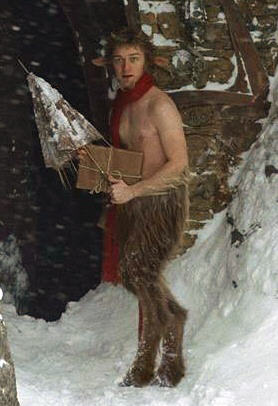
She's always wondered how she came into the care of the circus. As she takes increasingly daring steps to learn about her past, she finds that the satyr who raised her, Nick Leeds, [The satyr? In a book with fantastical creatures, you might make it clear whether Nick's just a lecher or an actual goat-man. (Needless to say, it would be far more interesting if he were part goat, like this guy.)] [Actually, I think a man's body with a goat's head would be more amusing.]becomes less and less honest. If she can't trust the only family she's ever known, maybe she'll do better with the one she never did.

There's trouble in the Spook Patrol too. Gabriel Ramirez has been working with Marshal Barrett since childhood, [Emma's been telling fortunes her entire fifteen years. Gabriel and Marshal have been working together since childhood. Does everyone in this world emerge from the womb with a career?] but, being a half-demon himself, the new anti-demon laws have him spooked. He's not sure if Barrett can protect him from their fanatical new supervisor--and worse, he's not sure whether Barrett would even bother. After he makes a devastating mistake on the job, he goes on the run...but he only knows one place that might help a monster like him.

I have enclosed a few sample pages and would be pleased to provide a synopsis and sample chapters at your request; the manuscript is also available electronically. I have enclosed a self-addressed stamped envelope for your reply. Thank you for your time and consideration.


Notes

There's not much connection between the plot paragraphs. If this is YA, you might want to ditch the Gabriel paragraph and stick with Emma. If she and Gabriel have an important relationship, bring him in, but make sure it's clear that Emma's the star. She disappears here.

You should also decide whether learning about her past or dealing with PEST is the plot, and focus mainly on that. One of these is probably a subplot, worthy of passing mention, but not at the expense of what the book is really about.

Thursday, July 05, 2007

Face-Lift 371


Guess the Plot

Fortune's Fool

1. Every day the crystal ball showed Maggie the winning lottery numbers; every day, she played those numbers and lost. After six months of this, she started to wonder whether the forces of fate were jerking her around.

2. Sir Walter Raleigh steals the priceless Shroud of Turin from the Vatican, planning to subject it to black magic and thus become invincible. But a powerful alien being is also determined to get the Shroud. Raleigh is beginning to think he was a fool to get out of bed today.

3. Madame Kaya is convinced that she can not only tell the future, but also help with weight loss, thinning hair and prostate problems. But it's not until a pudgy, balding editor from New York stops by to get his palm read that the true extent of her powers becomes known.

4. Editors at one of the world's largest business magazines attempt to improve morale in the office by hiring a jester. But the move backfires, fueling employee complaints of management thinking of themselves as royalty.

5. When Carl Saperstein, owner of top 3-year-old Fortune's Fool, is shot dead outside his store in LA's Garment District, homicide detective Zack Martinez knows two things: finding the perp is a long shot, and he'd better bring his new wife some of that silk dupioni.

6. Nip’O’Jack used to be a good leprechaun – in 500 years, no one found his pot o’ gold. But now, he’s had five people find it in a month and the Leprechaun Bank is about to foreclose on his shoe-making business.


Original Version

Dear [Agent]:

A Tudor earl and hero joins an illicit faction of the Church of England to steal the Turin Shroud from the Vatican before Sir Walter Raleigh and his rival group can subject it to black magic and thus become an invincible danger to Queen Elizabeth’s throne [Some day I gotta put together a list of the most unbelievable Guess the Plots that turned out to be the real plot.] in my 111,000-word fantasy novel Fortune’s Fool.

When Earl Hertford and Raleigh mix up the magic cloth with a number of decoys, both men escape the pursuing Catholic Church possessing a Shroud each believes authentic. [When you go into the Vatican gift shop and see an entire rack of Shrouds of Turin, you can be pretty sure the real one isn't among them.] Unfortunately, they are not the only dupes, for their activities have drawn the attention of a being from outside our world who may be either an angel seeking to reclaim the Shroud from human abuse or something far worse.* [An angel ought to know which Shroud of Turin is from Turin, and which was made in China.] [What's with the asterisk?]

[Leading Chinese Exports, 2007

5. Poisonous pet food
4. Pollution
3. Sudanese military equipment
2. Fake Shrouds of Turin
1. Illegal DVD knockoffs]

The being begins murdering off both factions, who should stand between it and the throne instead of constantly infighting. [Imagine the being's embarrassment when he kills a couple dozen people only to end up with the Shroud of Hong Kong.] Hertford digs through secrecy put up by his allies as well as his enemies until he finds that the power behind the Shroud also drives the being and he can use one to destroy the other-- a truth neither the Catholic Church nor his own countrymen will accept. [Come to think of it, I don't accept it either.] Abandoned by his allies, Hertford must destroy not only this being but also a sinister third party responsible for the rumors of Raleigh's intentions and determined to destroy him and everything he holds dear. [Ah, so it was only a rumor that Sir Walter Raleigh was going to subject the Shroud of Turin to black magic and become invincible. Amazing how many people will believe a rumor, no matter how ridiculous it sounds.]

The plot is similar in vein to [books]. [I would rather know that it's similar in theme or in plot or in tone or even in length than in "vein."] [Why am I not surprised that your attempt to think of books this is similar to has thus far been in vain?] [I am approaching you [Agent Name], because of [reason specific to agent].

Thank you for your consideration and time. An SASE is enclosed for your reply. May I send you the manuscript, which runs to 111,000 words?

Sincerely

[* Korlach, Lord of the Dark Realm]


Notes

If the stolen Shrouds are decoys, why is the Catholic Church pursuing Hertford and Raleigh? Also, not clear how the Church knows about the other-worldly being. The being is after Hertford and Raleigh's Shroud(s), right? Are they communicating with the Church as they flee?

If Hertford needs the Shroud to kill the being, it would be unfortunate if he had one of the decoys. Do Raleigh and Hertford each have a Shroud? Is Hertford's the real thing?

Actually, it sounds like something people would enjoy, but I'm not sure it wouldn't sound better without the "being." Sir Walter Raleigh stealing the Shroud of Turin from the Vatican and using black magic is fantastical enough without a Klingon showing up.

Sunday, June 24, 2007

Face-Lift 362


Guess the Plot

If Only for a Season

1. Jeremiah Clark rises from penniless plowhand to millionaire Gold Club Member, almost overnight. He's at the peak of high society. Then, just as fast, he loses everything. Oh well, it was nice being on top of the world . . . if only for a season.

2. For Master Chef Burl Evers, a final exam turns into tragedy when several of his students are murdered. Beautiful detective Lucy Burns must sift through the clues to discover which student used arsenic to season the duck.

3. Bob thought he was going to get a prize buck this year, but when he gets to the woods, they’re empty. Turns out - for one season only - the deer have licenses to hunt us.

4. It's summer break and Manly tells Chastity his girl is gone until fall. Chastity planned on saving herself for Mr. Right, but when she sees Manly's rippling abs and cherry red convertible, she decides she'll give up her virginity . . . if only for a season.

5. Coach Mike Flannagan thinks he can handle any player, no matter how wild or tough. But when former cheerleader Chrissy Watkins beats the boys at tryouts, he knows he's in for a rough badminton season.

6. Tiffy and Biff go gaga the first day of summer school and it looks like they'll be blissed forever, but alas --their Chemistry professor is an imposter: notorious criminal Octopus McGee. Will Mae Wong and her acrobatic sidekicks arrive in time? Or will McGee's explosive laboratory homework blow the Alpha Beta Beta house clear to the moon?


Original Version

Based on a true story, Jeremiah Clark turns from $2 a week sharecropper to Victorian millionaire practically overnight. But his wealth and position are disrupted by Molly Maguire-style violence in a contest for control of the booming gold camp.

In 1895, Clark flees the poverty-stricken South for the gold fields of Cripple Creek, landing in camp with a grubstake of $128. [I don't know what a grubstake is, but I once had a grubsteak. I didn't actually know it was a grubsteak until I turned it over and found a bunch of pulsating beetle larvae. That's the last time I eat at the Coleoptera Sizzler.] Will it last six months, time enough to get established? Not likely. But with determination and a series of lucky gold strikes, [especially the series of lucky gold strikes,] he rises from plowhand to Gold Coin Club member. [Which means he can pick up his rental covered wagons directly from the lot. No paperwork.] He is among powerful friends at the top of high-society. But success is short-lived, when union bosses engage in political insurrection and violence, touching off a labor war involving the Colorado militia and citizen mobs. [Damn. I can't get the song "Up On Cripple Creek" out of my head now.] Men are beaten and killed, malefactors detained and deported, and the chaos is edging Clark’s operation close to financial instability. In an attempt to control the violence, he engages the political backing of the state of Colorado, including the state militia. But the ugly results of anarchy and military despotism bring the once-rich region into deep depression. Within eighteen months of his millionaire status, Clark can no longer maintain profitable production levels and descends into insolvency. [I feel like I'm back in Econ 101. I couldn't stay awake there, either.] Three steamer trunks hold his last remaining possessions, [a pair of socks, a wooden nickel, a harmonica and 3700 pounds of gold.] and he takes the only work available, a slag worker in the mine he built with his own hands. It was true greatness, if only for a season. [I'm no economist, but let's say my blog is a gold mine that has made me millions of dollars, and then people stop reading it. I shut down the gold mine, but I still have my millions, which I use to start a carpet shampooing franchise. What happened to Clark's money?]

I am the founder of a Colorado Springs software company, and responsible for all written and verbal marketing communications. [No one else in the department is allowed to speak or write, but they may nod at each other suggestively.] My writing experience has developed from creating marketing materials, web pages, and whitepapers. I have climbed twenty seven Colorado mountains over 14,000’ and personally visited the remains of these gold camps.

Regards,


Notes

It's customary to report the length of a book when trying to sell it. Even more customary is to reveal the book's title. Fortunately I was able to ascertain the apparent title from the attachment,

Why a season? Wouldn't eighteen months be six seasons?

The first paragraph is unnecessary. All it has that isn't in the second paragraph is Clark's first name, which you can put in the second paragraph, and the fact that it's based on a true story, which you can put in your last paragraph (with the word count and title) in place of your marketing credentials. Then divide your big paragraph into three paragraphs with appropriate transitions.

Now you have a well-written standard query. But is it an interesting, well-written standard query? I'd like to hear more about the human effects of the turmoil and Clark's losses than the financial effects. Phrases like "labor war," "political insurrection," "malefactors" "financial instability," "anarchy and military despotism," "maintain profitable production levels," "political backing," and "descends into insolvency" make my eyes glaze over. Does Clark have family and employees counting on him? Does he learn any valuable lessons? Why should we care about Jeremiah Clark? Your story is about the man, not his mine.